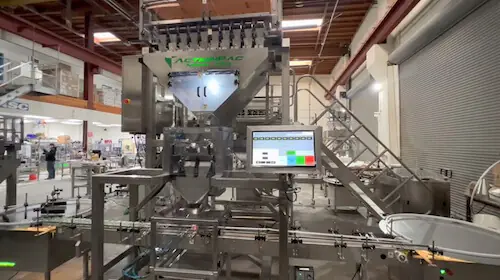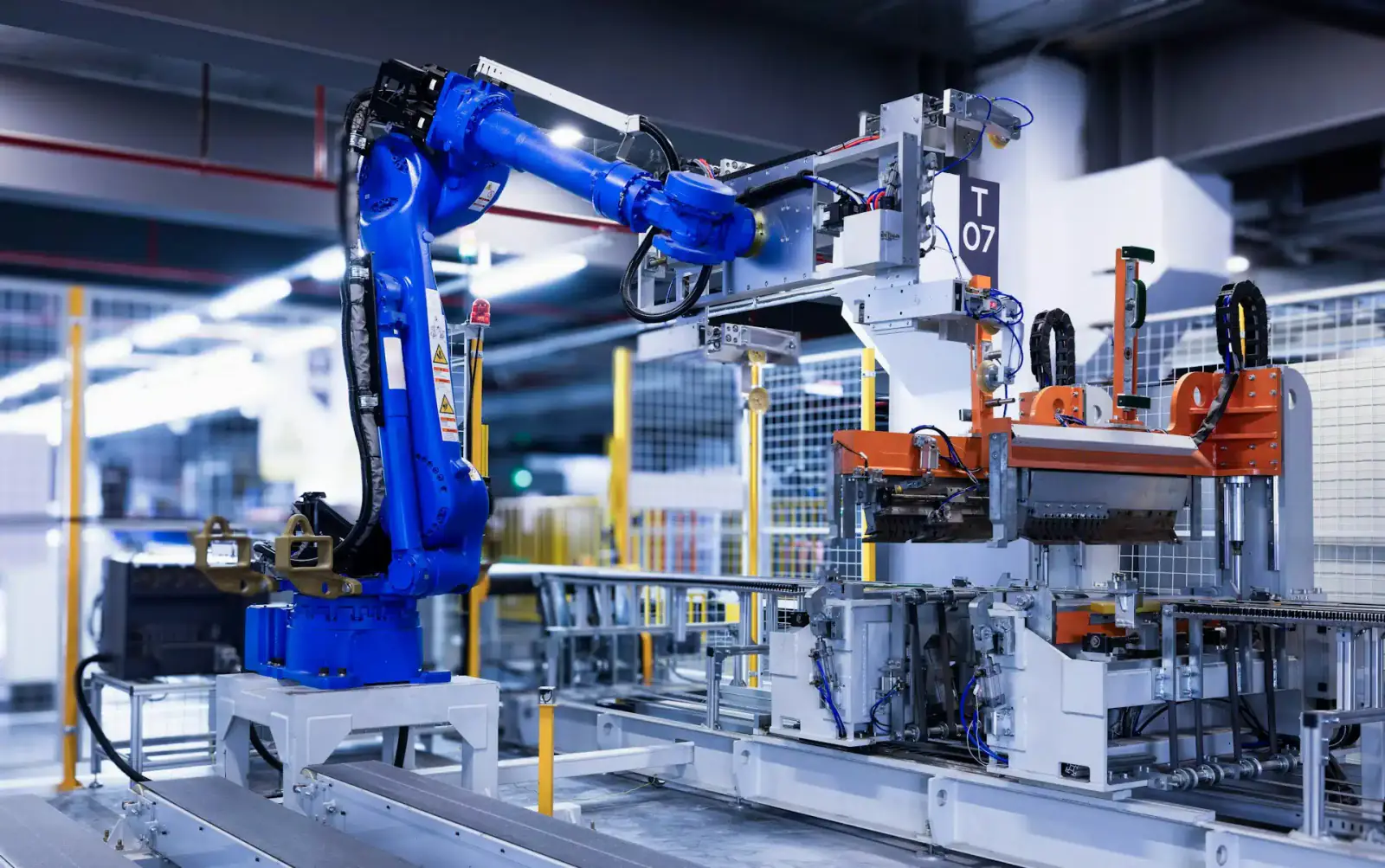
The right time to automate is when manual packaging starts holding production back. That can happen because orders increase. Labor becomes harder to manage. Packaging quality becomes inconsistent.
Sometimes the problem is even simpler. Your production volume is growing, but your packaging team cannot keep up.
There is no single production number that means every company needs packaging automation. Instead, look for repeated constraints across your packaging operation. When packaging becomes a bottleneck, automation can increase output without simply adding more people.
Here are the signs that it may be time to automate your packaging process.
1. Your Packaging Line Has Become a Production Bottleneck
Watch what happens between production and shipping. Are finished products waiting to be packaged? Does manufacturing slow because packaging is behind? Do orders get delayed even though enough product has been produced?
These are strong signs of a bottleneck. Your production line is only as fast as its slowest step.
If upstream equipment produces faster than employees can weigh, fill or seal packages, the entire operation loses capacity. Packaging automation can remove that constraint.
However, you may not need to rebuild the entire packaging line. Start by identifying the exact process causing the slowdown. It could be weighing. It could be filling. It might be container handling, sealing or labeling.
Automating one step can sometimes create a major improvement.
2. Labor Costs Keep Increasing
A manual process requires people and time. As production volumes increase, companies often respond by hiring more operators. That approach works until labor costs become a major packaging expense.
Calculate what your manual packaging process actually costs. Include more than hourly wages. Consider recruiting, training, overtime and turnover. Also measure the time spent on routine packaging work.
Many packaging jobs involve repetitive tasks. Employees may spend hours weighing, filling, sealing or moving packages. Automation can reduce that repetitive workload.
Employees can then focus on quality, operations, maintenance and other skilled work. The goal is not simply to replace labor. It is to use your team where they create the most value.
3. Your Team Is Struggling to Keep Up With Demand
Growth is good. Growth that your operation cannot fulfill becomes a problem.
Maybe you added another shift. Perhaps overtime has become routine. Or seasonal demand puts your packaging department into constant catch-up mode.
If your team is struggling to keep pace, your current packaging process may be reaching its limit. Automated systems can increase output without increasing labor at the same rate.
Before investing, calculate two numbers:
Current packages per minute
and
Required packages per minute
Then estimate where demand could be in the next 12 to 24 months. Your packaging system should solve today’s problem while giving your business room to grow.
4. Your Production Volume Is Growing Faster Than Packaging Capacity
Increasing production volume can expose weaknesses that were easy to overlook at lower output. A manual packaging operation may work well at 500 packages per day. Double the volume and the same process can become a bottleneck.
Look at how packaging capacity changes as your business grows. Does every increase in volume require more people? Do you need more overtime? Are finished products waiting longer before shipping?
If packaging capacity cannot scale with production, it may be time to consider automated solutions. The goal is to build a process that can support growth over the long term.
5. Package Weights Are Inconsistent
Manual weighing becomes difficult as production volume increases. Small inconsistencies can create two expensive outcomes.
Overweight packages give away product. Underweight packages may require rework and create compliance concerns. Both increase operating costs.
For high-value products, product giveaway deserves particular attention. A small overfill may seem insignificant on one package. Multiply it across thousands of packages and the cost becomes much clearer.
Automated weighing can improve repeatability while increasing production speed. The right system should control both throughput and accuracy. You should not have to sacrifice one for the other.
6. Rework and Waste Are Increasing
Packaging problems create work twice. An inaccurate fill may need correction. A poorly sealed package may need to be reopened or discarded. Damaged product may need replacement.
Every correction adds labor and materials without creating another sale. Track how much time is spent on rework. Then identify why it happens.
If the same manual process causes repeated errors, that step may be a strong candidate for automation. Reducing waste and rework can help reduce costs while making production more predictable.
Packaging automation works best when it removes a known, measurable problem.
7. Adding More Employees No Longer Solves the Problem
Hiring is often the easiest way to increase manual production. Eventually, adding another employee produces diminishing returns.
There may be limited floor space. Operators may interfere with each other’s workflow. Training may become difficult. Production may also vary depending on who is working.
At that point, the problem is not necessarily staffing. The process itself may need to change.
Automated systems create a more repeatable workflow. Instead of adding labor whenever volumes increase, the business can build more capacity into its production line.
8. You Need More Consistent Packaging
Customers expect consistency. Retailers expect it too. Packages should contain the correct amount of product. Finished packages should also remain consistent between production runs.
Manual processes naturally introduce variation. One operator may fill differently from another. Results can also change as workers become tired during a shift.
Automated systems follow controlled settings and recipes. That helps create repeatable results across the packaging line.
Consistency becomes especially important as businesses enter larger retail markets or regulated industries.
9. Seasonal Demand Is Difficult to Manage
Seasonal spikes expose production limits quickly. A manual packaging process may work well during average months. Then a major order arrives.
Suddenly the business needs overtime, temporary workers or additional shifts. That can increase labor and other operating costs. It can also make output less consistent when temporary employees require training.
Packaging automation creates capacity that does not disappear after peak season. The right system can help operations handle spikes while creating room for long-term growth.
10. Your Business Is Ready to Scale
Packaging should support growth, not restrict it. Consider what happens if sales increase by 25%. What about 50%? Could your current packaging process handle that volume?
If the answer requires doubling the packaging team, it may be the right time to automate. This does not mean buying the largest system available. It means planning around future requirements.
Modular equipment can be especially useful here. Businesses can automate a critical process today, then add capacity or integrations as needs change.
You Do Not Have to Automate Your Entire Packaging Line
One common misconception about packaging automation is that it requires a completely automated packaging line. It does not.
Some businesses need fully integrated systems. Others get a strong return from automating one process.
You might start with automated weighing and filling while keeping container loading manual. Later, you could add indexing, sealing, capping or other equipment.
This approach can lower the initial investment. It also allows your team to learn the equipment before expanding automation.
The right starting point depends on your bottleneck.
How to Decide What to Automate First
Do not start with a machine. Start with your process.
Follow the product through your facility from production to the finished package. Where does it stop? Where does your team spend the most time? Where do mistakes happen? Where is product lost? Where does work accumulate?
That is where the automation conversation should begin.
A useful evaluation should consider four areas:
Production volume: How much are you producing now?
Labor: How many people does the process require?
Accuracy: How much product is lost through overfill or rework?
Growth: What production rate will you need in the future?
These numbers turn packaging automation into a business decision.
What Should You Know Before You Automate Your Packaging Process?
Once you identify the bottleneck, gather information about the application. Start with the product. How does it flow? Is it fragile, sticky or irregular? Does its behavior change with temperature or humidity?
Next, define the package. Are you filling bags, pouches, jars, bottles or another format? Then define your target weight and required accuracy. Finally, establish your desired production volume.
Those details help determine which automated solutions make sense. They also make equipment quotes much more useful.
How Much Does Packaging Automation Cost?
Cost depends heavily on what you automate. A standalone machine costs much less than a complete integrated packaging line. Product complexity, production speed and accuracy also affect pricing.
That is why comparing equipment only by purchase price can be misleading. A better comparison considers the return.
How much could you reduce labor costs? Could better accuracy reduce product giveaway? Could additional throughput allow the business to accept more orders? Could automation reduce overtime or eliminate another shift? Could a more efficient production line reduce costs over the long term?
These questions help determine what the investment is worth. ActionPac also has a detailed guide on how to calculate ROI on a complete food packaging line investment.
Is Your Product Ready for Packaging Automation?
Not every product behaves the same way inside packaging equipment. That matters. Packaging equipment should be designed around the actual material being processed.
Powders can bridge or clump. Fragile products can break during handling. Sticky products can create flow problems. Cannabis flower can vary in size, density and moisture.
For powder applications, our Ultimate Guide to Powder Packaging Machines covers these product behaviors and equipment considerations in more detail.
Testing the real product can reveal these challenges before equipment enters production. That is especially valuable for difficult applications.
The goal should not be proving that a machine can run. The goal is proving it can run your product at the required speed and accuracy.
Choosing the Right Packaging Automation Partner
Packaging automation affects more than one machine. It affects product flow, labor, operating costs and production goals. That makes engineering support important.
Look for a partner that understands the complete application. Ask how the system will be tested. Ask how it can integrate with your existing production line. Find out what happens if your product or packaging format changes.
Most importantly, ask what support looks like after installation. Automation should create capacity for your business. It should not create another production problem.
How ActionPac Approaches Packaging Automation
ActionPac builds automated packaging solutions around the application. That means understanding the product before recommending equipment.
We evaluate target weights, package formats and production requirements. We can also consider existing equipment that needs integration.
Some operations need a standalone solution. Others need a complete turnkey packaging system. The right answer depends on the bottleneck.
ActionPac equipment is engineered in the USA by a team with in-house automation expertise. Our focus is precision, reliable production and long-term support.
The goal is to solve today’s production problem while giving your operation room to grow.
Is It Time to Automate Your Packaging Process?
You may be ready for packaging automation when your manual process becomes a constraint. Look for recurring signs.
Production volumes increase, but packaging cannot keep up. Labor costs continue growing. Your team is struggling with repetitive tasks. Weight variation creates waste. Rework consumes too much time. Or your business grows faster than your current packaging operation can support.
You do not need every one of these problems before exploring automation. One costly bottleneck can be enough.
Measure the problem first. Then determine whether an automated system can solve it. That is how packaging automation becomes a productive long-term investment.
ActionPac builds the world’s most efficient automated packaging equipment
Get a Quote
Frequently Asked Questions
When is it time to automate your packaging process?
It may be time to automate when manual packaging limits production volume, raises labor costs or creates inconsistent results. Growing demand, frequent rework and product waste are also common signs.
How can packaging automation reduce costs?
Packaging automation can reduce costs by lowering repetitive labor needs, reducing product giveaway and limiting rework. The actual savings depend on your production volume and packaging operation.
How do I know which packaging process to automate first?
Find the biggest constraint on your packaging line. Look for where products accumulate, where your team spends the most time or where errors happen most often.
Do I need to automate my entire packaging line?
No. Many businesses begin by automating one manual process. Weighing, filling or sealing can often be automated before investing in a fully integrated production line.
Does packaging automation reduce labor costs?
It can reduce the labor required for repetitive tasks. Automated systems can also help existing employees focus on skilled work instead of repetitive packaging processes.
What information do I need before contacting a packaging equipment manufacturer?
Know your product, package format, target weight and desired production volume. Actual product samples can also help manufacturers evaluate difficult applications.